Hello MAGAReport Readers!
If you are coming here from email - sorry! I mashed send on my this post too quickly. I meant to let you know that I am spinning off a NEW newsletter about surveillance called Privacy Now. This post about ALPRs is a sample from that and all my surveillance posts will live over there from now on. Subscribe if you like and stay here for more MAGA news!
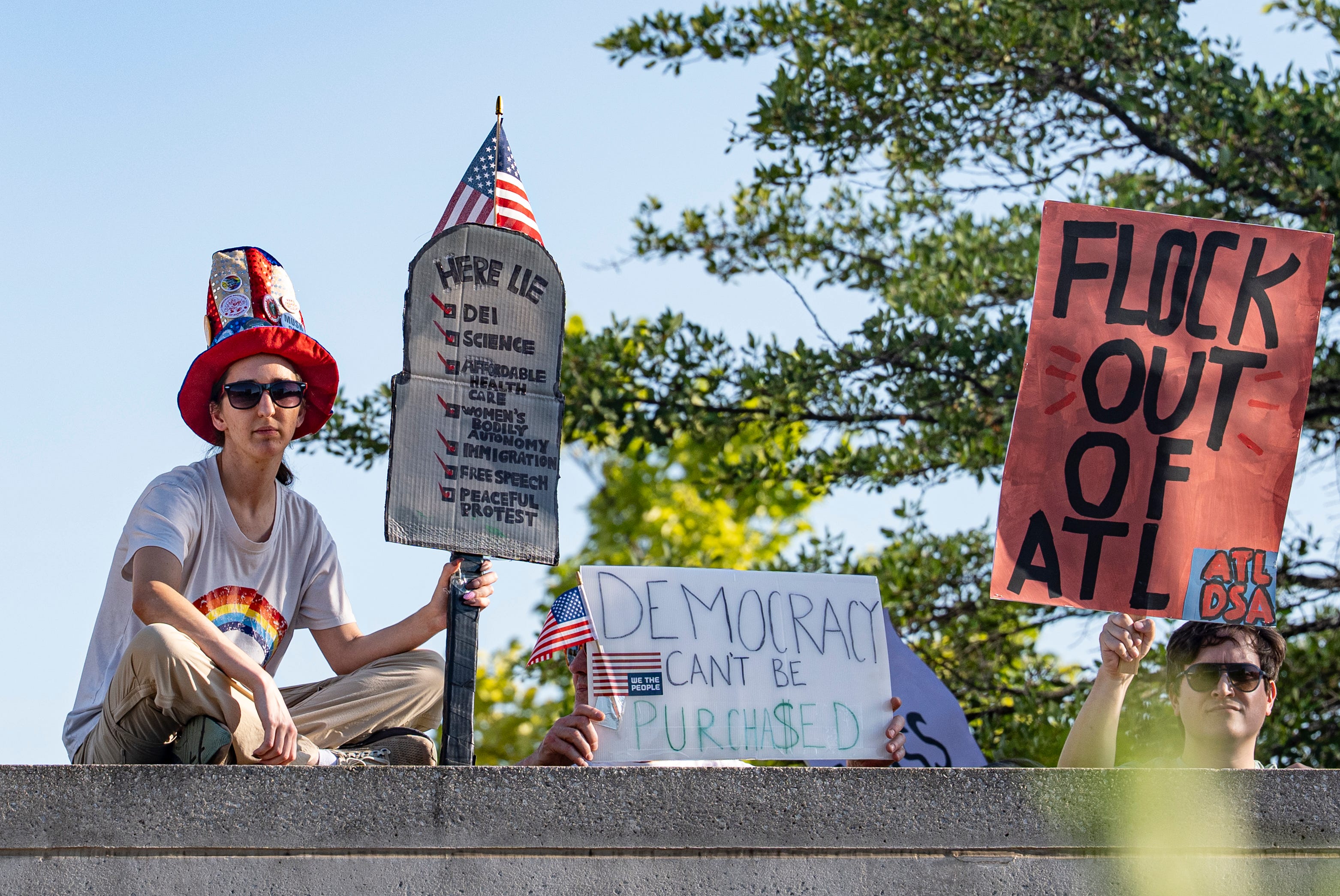
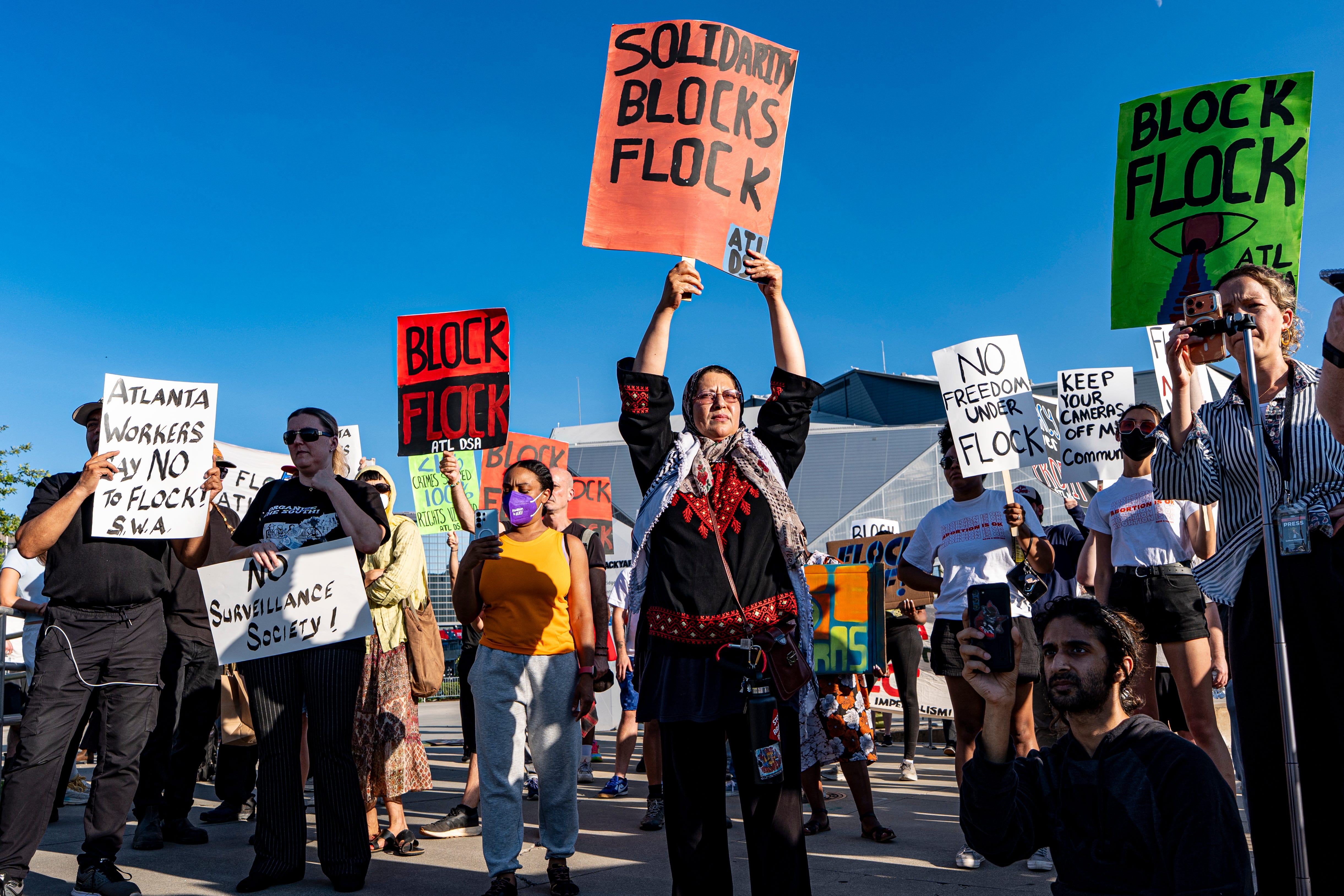
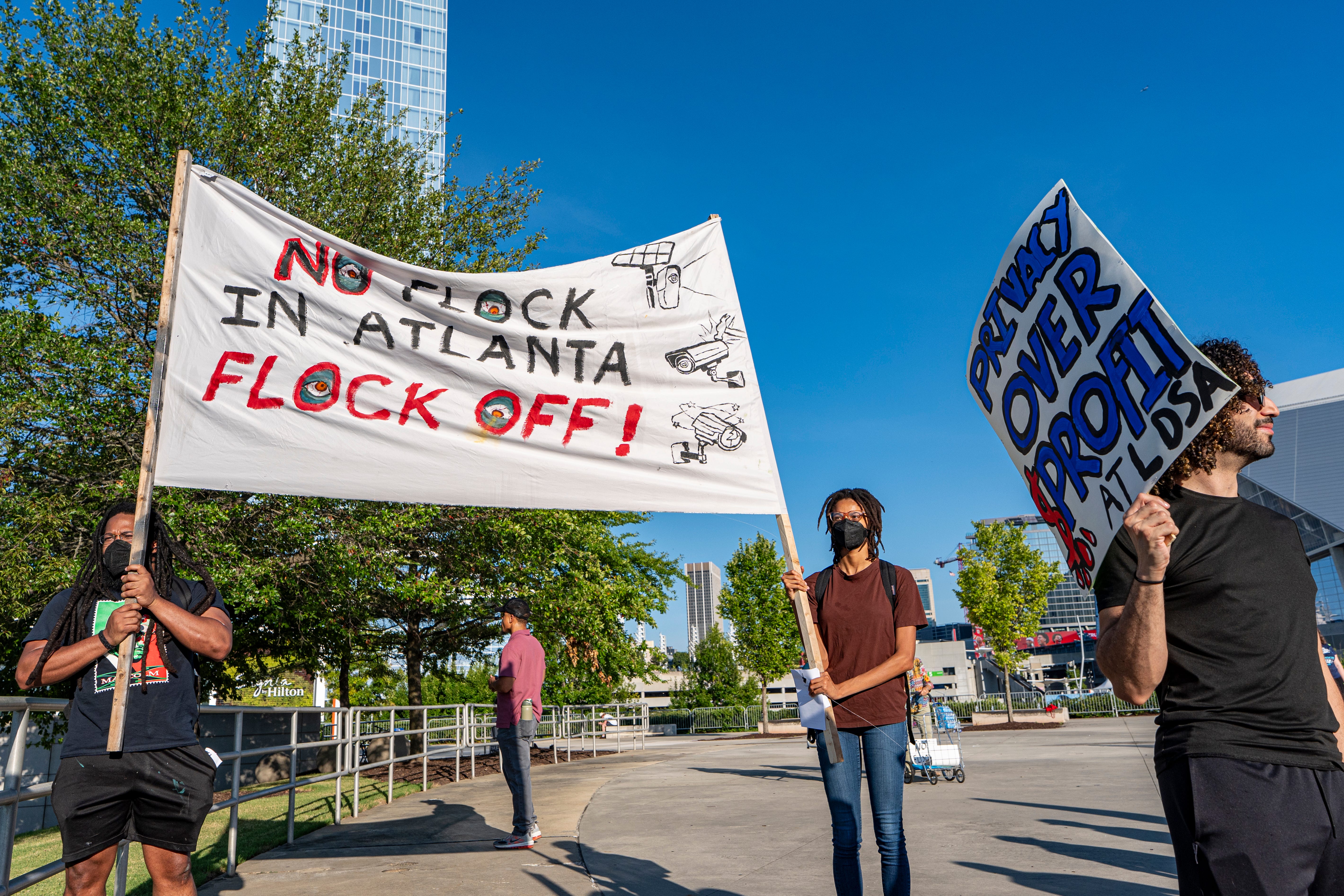
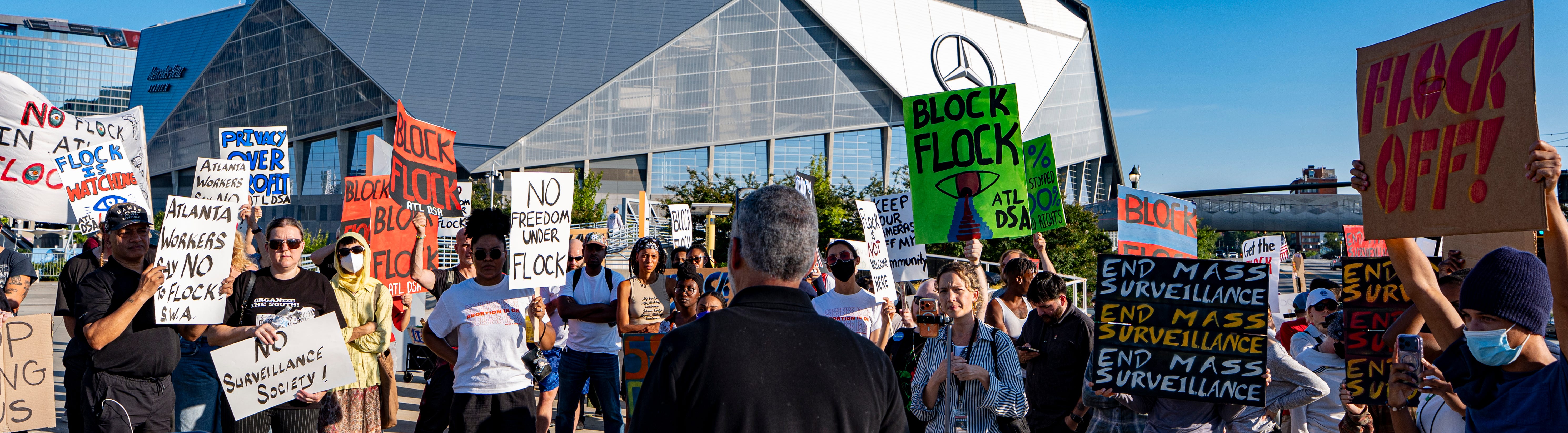
Welcome new readers and greetings from Atlanta where Flock is hosting the Flock Forward conference and protesters are responding:
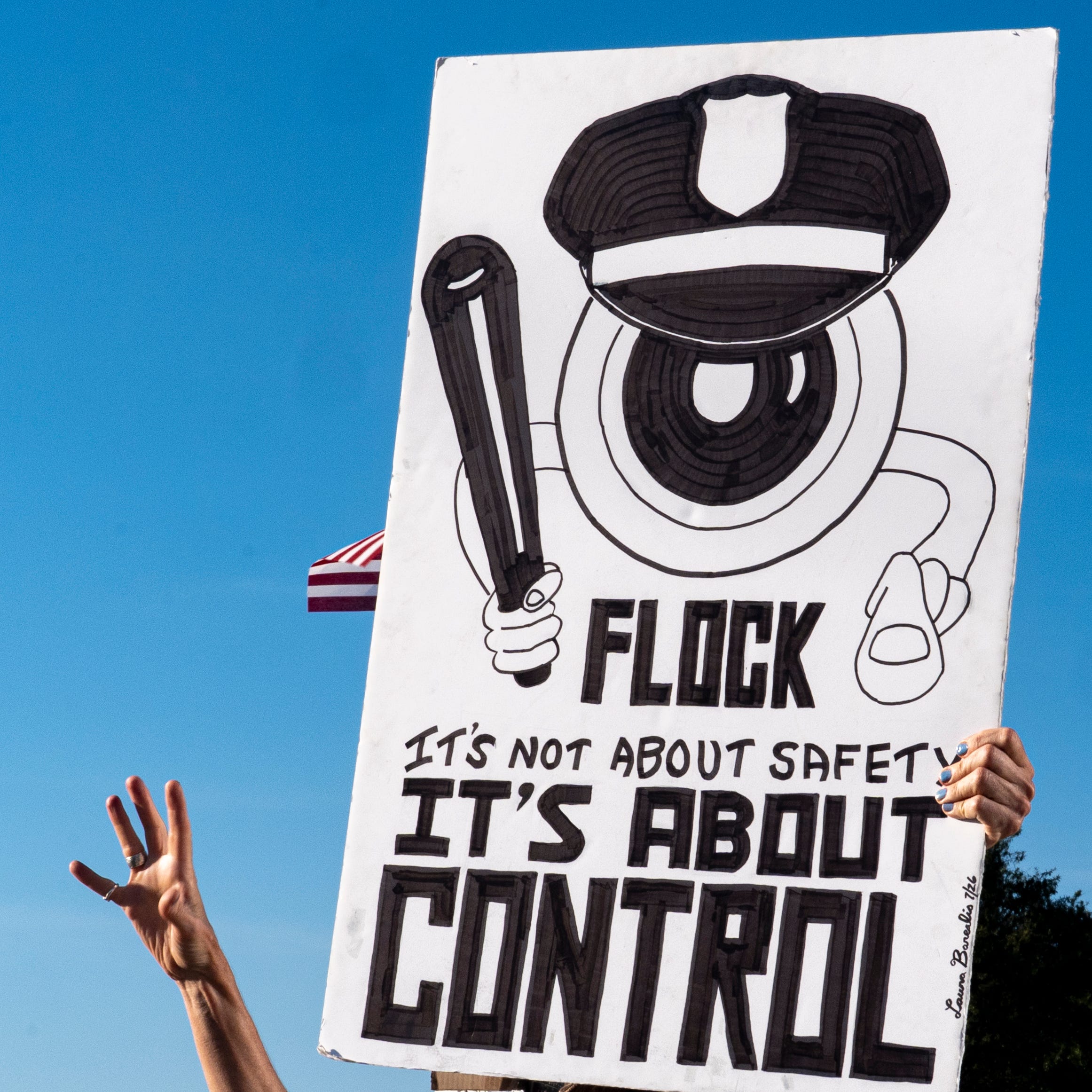
When arguing for the removal of ALPRs and other invasive surveillance, I think it is important to, in good faith, rebut the arguments that police make in favor of them. In this newsletter, I’m going to be sharing some of the rebuttals that I write in the hope that the sources and arguments may be useful to you, dear readers, in your own fights.
Join me in crafting this rebuttal to the Jacksonville Sheriff’s Office post on Facebook:
Why do we support the use of license plate readers? Because they make our community safer.
Beginning here, the question is what we mean by “safer”. The police may mean a reduction in certain crimes, but many of us do not feel safer having the police track our movements. The act of surveillance itself is harmful. Introducing a violative technology to reduce other crime does not mean the community is safer as a whole. It just means one type of harm may go down (and that is debatable).
Over the past two years, LPRs have proven to be an incredibly effective tool in helping solve crimes, locate missing people, and save lives. Since 2024, they’ve helped solved 15 murders, 17 kidnappings, 6 forcible sex offenses, nearly 100 shootings, and 172 missing-persons cases.
“Help” is doing a lot of work here. Would these crimes have been solvable without the cameras? If so, the cameras don’t really deserve credit for this. The value of these cameras is inflated by giving them full credit for solving crimes that might have been solved without them.
Numbers like this are often presented as though there is no cost on the other end. But there is a huge cost we pay for that “help”:
Flock says they record billions of license plates every month. This means hundreds of billions, maybe over a trillion, of recorded movements since 2024. Is that level of state surveillance and the freedom of movement and association we give up with it worth the trade?
How many abuses of the technology have happened in that time? How many police have tracked someone they shouldn’t? How many people have been monitored because they legally attended a protest or went to a gun range or visited a medical clinic?
How many errors have led to bad police encounters in that time? Flock reports having around a 7% error rate. How many people were flagged as driving stolen vehicles or participating in a crime because of those errors? How many of us are at risk? People have gone to jail because Flock made a mistake. Those risks are real and need to be factored in.
We’ve seen that impact firsthand. An LPR recently helped us locate a teenage girl who was kidnapped from her home in Georgia and brought to a Jacksonville motel, where we were able to get her to safety.
An LPR also helped us quickly locate an elderly man with dementia.
And after one of our corrections officers was tragically killed at a truck stop in October 2024, an LPR helped investigators locate the suspects, who were in custody within 48 hours.
When someone you love is in danger, you want us to have every responsible tool available to help find them and solve the crime. We currently have 141 fixed LPRs and 9 mobile LPRs across Duval County.
Anecdotes like this are designed to make an issue emotional. They are designed to put any opponents of the technology on the defensive, allowing the proponents of the surveillance to say “Why do you want killers to go free and kidnappers to get away with it and missing people to remain missing???” It is a bad faith argument because anecdotes are not evidence.
FBI data shows that, in Atlanta at least, crime clearance rates have not meaningfully decreased despite a robust surveillance infrastructure.
Also, there are lots of people who, even being in a terrible situation, would not want the entire country stripped of their constitutional rights to give police a tool to search for a perpetrator. If we care about reducing crime, there is a lot of evidence-based research out there on ways to do that, which focus on reducing the chance that the crimes are committed in the first place. There are many other solutions to consider besides introducing surveillance to solve the problems after they occur.
We also understand that LPRs can raise questions and concerns. That’s why their use is tied to legitimate law-enforcement purposes, monitored, and audited. If someone misuses the system, we will address it.
Our goal is to use technology responsibly to help keep our community safe while maintaining accountability and trust.
Every surveillance system ends up being abused. Creating a system that allows the abuse to happen and then addressing it later is a flawed approach. We all want to live in a society where we can move freely, without unreasonable monitoring, in part because we want to be free from the opportunity that the government abuses that data.
These systems reduce our freedom. They create a police surveillance state. We want safe communities, but we surrender our safety when we are surveilled. There are ways to reduce crime without asking us to surrender our rights. We can do better.
More data, arguments, and anti-surveillance news is on the way. In the meantime, here are a few more pictures from the protests at the Flock Forward conference last night.
Substack is going to ask you to pay for this newsletter, but please don’t! Writing this is my job and I don’t need extra money for doing it 💛